


Running should leave you thinking about your pace, breathing and surroundings—not a painful patch of irritated skin. However, repeated movement, warm weather, sweat and unsuitable clothing can create friction that becomes increasingly uncomfortable with every mile. Applying an anti chafing cream for runners before training can help create a protective layer between the skin and whatever is causing the rubbing.
Chafing can affect beginners, occasional joggers, marathon runners and experienced trail athletes. It is not necessarily a sign that something is wrong with your fitness or body shape. It is usually the result of repeated contact between skin, clothing or equipment. Understanding why it happens makes it much easier to prevent.
What Causes Chafing While Running?
Chafing develops when the same area of skin experiences repeated rubbing. During running, thousands of similar movements take place as the legs move, arms swing and clothing shifts. Even mild friction can become irritating when it continues over a long distance.
Sweat can make the problem worse. Damp fabric may cling to the body, while moisture can soften the skin and make it more vulnerable to irritation. Salt left behind as sweat dries can also feel rough against sensitive areas.
Common contributing factors include:
-
Skin rubbing against skin
-
Damp or sweat-soaked clothing
-
Rough seams, labels or waistbands
-
Poorly fitting sports bras
-
Hydration packs and running belts
-
New or untested running clothes
-
Hot and humid conditions
-
A sudden increase in training distance
A runner may feel comfortable during a short session but develop soreness during a longer run. This is because friction is cumulative. The more repetitions the skin experiences, the greater the likelihood of irritation.
Where Do Runners Commonly Experience Chafing?
Although inner-thigh irritation receives the most attention, running-related chafing can appear in several areas.
Inner Thighs
The inner thighs can rub against each other or against the seams of shorts and tights. This is especially common in warm conditions or during long runs.
Nipples and Chest
A running top can repeatedly move over the chest. Damp fabric, screen-printed logos and rough materials can increase nipple irritation.
Underarms
Arm movement can cause skin-on-skin contact or friction against the side seam of a vest or T-shirt.
Bra Line
Sports bras can move slightly with each stride. Bands, straps and fastenings may create pressure or rubbing, particularly when the garment is wet.
Feet and Toes
Socks and shoes can create friction around the heels, toes and sides of the feet. Moisture, bunching socks and unsuitable footwear can make the problem worse.
Waist and Shoulders
Running belts, phone holders and hydration vests can move during training. Even small amounts of movement may become uncomfortable over several miles.
What Should Runners Use to Prevent Chafing?
A good protective product should reduce friction without distracting the runner. Many products are described as creams, although balms, sticks, gels and ointments can perform a similar function by creating a smooth barrier.
The most useful chafing cream for runners should be easy to apply to known hotspots before exercise. It should also remain comfortable under clothing and allow the runner to cover different parts of the body without creating unnecessary mess.
When comparing products, consider:
-
How easily the formula spreads
-
Whether it feels greasy or sticky
-
Whether it can be applied without using your fingers
-
How portable the packaging is
-
Whether it suits frequent use
-
Whether it can be reapplied during long events
-
Which ingredients are included
-
Whether scented and unscented options are available
-
How much packaging must be replaced after use
The word “cream” is frequently used as a broad search term. A balm format may offer the same friction-reducing purpose while allowing direct application from a stick.
How Should Anti-Chafe Protection Be Applied?
Anti-chafe protection works best when it is used preventatively. Waiting until the skin is already sore means the friction has already caused irritation.
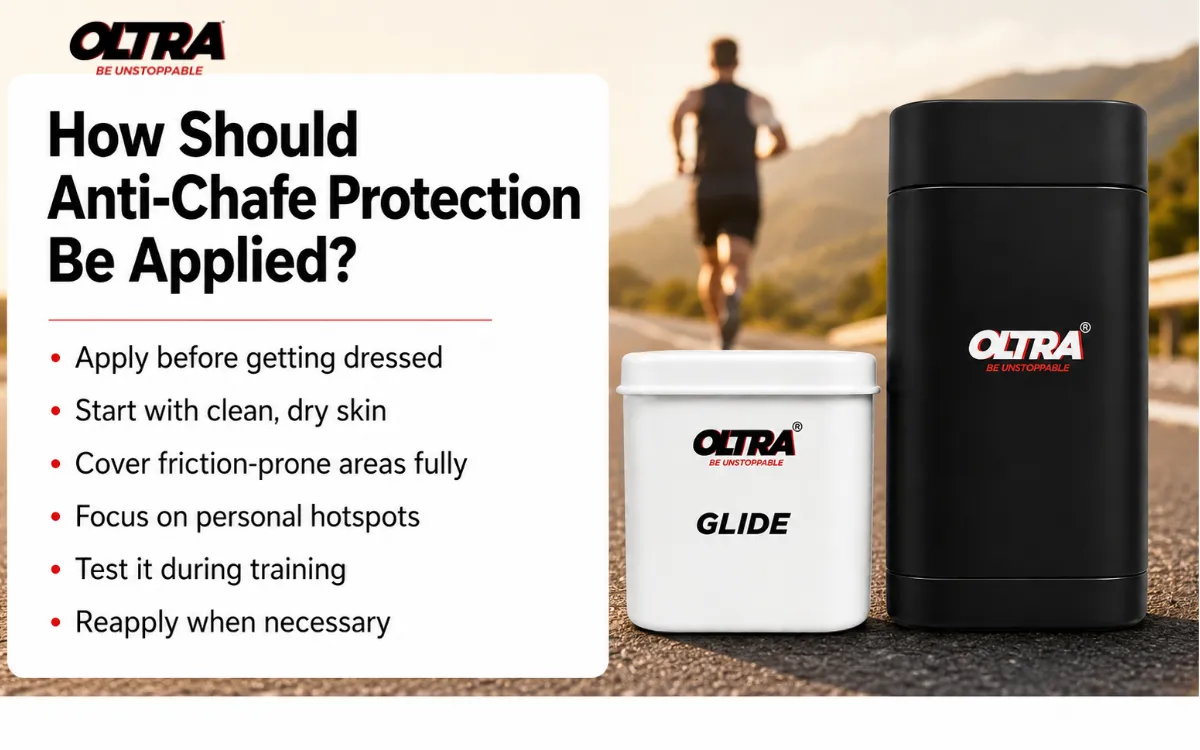
Apply It Before Getting Dressed
Start with clean, dry skin. Apply a generous, even layer over the complete friction-prone area. Cover slightly beyond the exact hotspot because clothing may shift while you run.
Focus on Personal Hotspots
Every runner has different problem areas. One person may need thigh protection, while another may need to focus on the chest, waistband or underarms.
Test It During Training
Race day should not be the first time you test a product. Try it during an ordinary training session and then during a longer run. This allows you to see how it performs with your clothing, sweat levels and typical distance.
Reapply When Necessary
Long-distance runners may benefit from carrying a compact product. Reapplication can be useful during ultramarathons, long trail events, particularly warm conditions or activities lasting several hours.
Do not apply a cosmetic anti-chafing product directly to open, bleeding or infected skin unless the product instructions specifically confirm that use.
Clothing Choices Matter Too
Anti-chafe protection should be part of a broader running routine. Clothing has a major influence on how much friction reaches the skin.
Choose moisture-managing materials rather than heavy fabrics that remain wet. Check seams around the thighs, underarms, waistband and bra line. Clothing should fit securely without creating excessive pressure.
Before a long run:
-
Inspect clothing for rough labels and seams.
-
Wear items already tested during training.
-
Make sure socks sit smoothly without folds.
-
Adjust hydration packs before setting off.
-
Avoid making several equipment changes at once.
-
Change out of wet clothing soon after finishing.
Body shape alone does not determine whether someone will chafe. Clothing construction, environmental conditions, running technique and distance all influence the result.
Cream, Balm or Powder: Which Is Better?
Different formats serve different preferences.
Creams can spread easily but may require hand application. Powders can help manage moisture, although they may not create the same continuous glide as a balm. Tape and patches can work well for isolated areas such as nipples but are less practical across larger areas.
A balm stick can be particularly useful for runners who value direct, controlled application. It can be applied to the thighs, underarms, chest, feet and other hotspots without dipping fingers into a container.
The ideal format is the one that you are comfortable using consistently. A technically effective product has limited value when the texture, packaging or application process discourages regular use.
What Should You Do If Chafing Has Already Started?
Stop or reduce the activity if continuing causes increasing pain. Gently wash the area, pat it dry and avoid tight clothing while the skin recovers. Do not scrub or repeatedly touch irritated skin.
Seek medical advice when the area is severely painful, does not improve, repeatedly reopens or develops possible signs of infection such as increasing warmth, swelling, discharge or spreading redness.
Preventative products are intended to reduce friction before irritation starts. They should not be treated as a substitute for appropriate wound care.
Why Choose Oltra?
Oltra creates natural, plant-based performance products for people with active lifestyles. Oltra Glide is a refillable anti-chafe balm designed for activities such as running, walking, cycling, gym training and everyday movement. Its direct-application format helps runners cover friction-prone areas without putting the product on their hands. The starter system includes a reusable applicator and replaceable refill, helping reduce the need to discard the complete container each time the product runs out.
Oltra Glide is available in different unisex scent profiles, including an unscented Core option. It is made in Britain and is presented by Oltra as vegan, cruelty-free, plant-based certified, aluminium-free, paraben-free and petroleum-free.
Choosing the Right Product for Your Running Routine
The best cream for chafing is not simply the product with the strongest marketing claim. It is the option that suits your skin, clothing, distance and application preferences. Look for a formula that creates a comfortable glide, can be used on all your personal hotspots and is convenient enough to become part of your normal pre-run preparation.
Final Thoughts
Chafing is common, but it should not be accepted as an unavoidable part of running. A combination of suitable clothing, properly adjusted equipment and preventative skin protection can make training much more comfortable.
Learn where your body tends to rub, protect those areas before setting off and test every product during training. A few minutes of preparation can prevent discomfort from dominating the final miles of your run.
